Updated October 26, 2026 · 9 min read
We earn a commission when you buy through our links, at no extra cost to you. How this works.
Short on time? Our picks
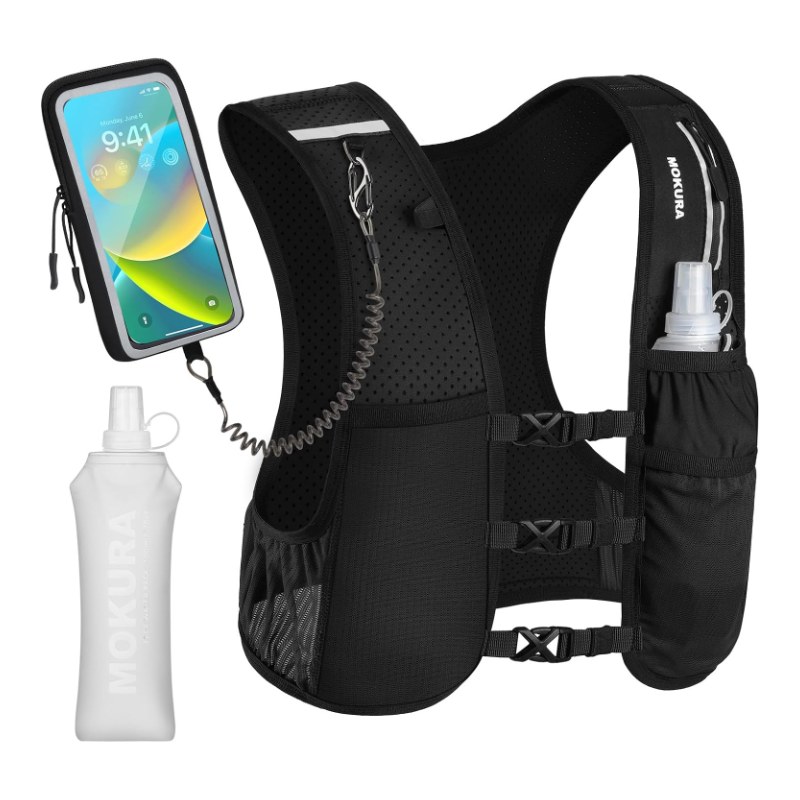 Best overallLightweight Running Vest with Soft Flask4.7★, under 10 ozCheck price on Amazon →
 Best with a bladderCriuage Hydration Vest with 2 L Bladderlong runs and hikingCheck price on Amazon →
Carrying water on a run used to mean a bouncing bottle in your hand or a heavy backpack that rubbed your shoulders raw. A running hydration vest fixes both problems. It sits high and snug on your upper body, spreads the weight evenly, and puts water, your phone, gels and keys within easy reach without stopping.
This guide picks the best running hydration vests for men and women, from light vests for short hot runs to bladder vests for long training days and race-ready vests for marathons and trails. We also explain how a hydration vest should fit, soft flasks vs a bladder, and when a running belt is enough instead.
Best overall
Lightweight Running Vest with 500 ml Soft Flask
A light vest that weighs under 10 ounces, with breathable mesh, stretch side panels to reduce bounce, three adjustable chest straps and a 500 ml soft flask included.
Buyers rate it 4.7★ and often mention the pockets, light weight and fit.
Quick answer: the best running hydration vests
- Best overallLightweight Running Vest with Soft Flask · 4.7★, under 10 oz
- Best with a bladderCriuage Hydration Vest with 2 L Bladder · long runs and hiking
- Best premiumSalomon ADV Hydra Vest 4 · race-day fit
- Best for short runsSWIFTVEST Phone Holder Vest · 6 pockets, 3 sizes
Pick by how far you run
Lightweight Running Vest with Soft Flask
One 500 ml flask, room for a phone and gels, and very little weight. Ideal for daily runs, tempo runs and hot weather.
Criuage Vest with 2 L Bladder
A 2 liter bladder carries enough water for long runs, hikes and rides where there is no water on the route.

Salomon ADV Hydra Vest 4
A premium, close-fitting vest from a trail running brand, built for long races and serious training.

SWIFTVEST Phone Holder Vest
For shorter runs when you mostly need your phone, keys and a small bottle close to hand.
The best running hydration vests, reviewed
Lightweight Running Vest with 500 ml Soft Flask
You need this if: you want a light, comfortable vest for everyday runs and races up to a half marathon.
- WeightUnder 10 oz
- Water500 ml soft flask included
- Fit3 chest straps, stretch sides
- Rating4.7★ (300+ ratings)
Why we recommend it: It is light enough to forget you are wearing it, and the elastic panels hug the body so it does not bounce. The soft flask has a bite valve and shrinks as you drink, which keeps the vest balanced. Buyers praise the pockets, the light weight and the fit.
Keep in mind: One flask is enough for most runs up to about 90 minutes. For longer runs in the heat, add a second soft flask such as these SWIFTER 500 ml soft flasks. A few buyers find it shifts a little once the flask is empty.
Criuage Hydration Vest with 2 L Bladder
You need this if: you run long, hike or ride where there is no water on the route.
- Water2.0 L bladder
- UseRunning, hiking, cycling
- FitAdjustable straps
- Rating4.5★ (1,200+ ratings)
Why we recommend it: A 2 liter bladder holds about four times as much as a single soft flask, so you can go much further between refills. Buyers like the quality, the versatility and the storage space.
Keep in mind: Bladders slosh more than soft flasks and are harder to refill mid-run. Some buyers mention the straps take a little time to adjust well.
Salomon ADV Hydra Vest 4
You need this if: you train for marathons or trail races and want a close, race-ready fit from a running brand.
- BrandSalomon
- StyleRace vest
- Best forMarathon, trail
- Rating4.5★ (1,900+ ratings)
Why we recommend it: Salomon vests are a favorite of trail and ultra runners because they wrap the upper body like a shirt. The ADV Hydra 4 is a slim, minimal vest designed for faster running where you only need the essentials.
Keep in mind: It costs a lot more than the other picks, and flasks may or may not be included depending on the listing you choose, so check before you buy.
SWIFTVEST Running Phone Holder Vest
You need this if: you mainly want to carry your phone, keys and a small bottle on shorter runs.
- Pockets6, incl. zipped phone pocket
- Water500 ml soft flask included
- Sizes3 sizes
- Rating4.5★ (1,500+ ratings)
Why we recommend it: Six easy-reach pockets, a water-resistant phone pocket and reflective details for early or late runs. Buyers like the storage space, the fit and how stable it feels.
Keep in mind: It is designed for carrying small items and a modest amount of water, not for long, unsupported runs.
Comparison table
| Vest | Water | Best for | Rating |
|---|---|---|---|
| Lightweight vest with flask | 500 ml flask | Everyday runs, half marathon | 4.7★ (300+) |
| Criuage 2 L vest | 2 L bladder | Long runs, hiking | 4.5★ (1,200+) |
| Salomon ADV Hydra Vest 4 | Check listing | Marathon, trail | 4.5★ (1,900+) |
| SWIFTVEST | 500 ml flask | Short runs, phone | 4.5★ (1,500+) |
How should a hydration vest fit?
A running vest should feel snug, like a close-fitting shirt, with no gaps between the vest and your body. When you jog in place it should not bounce or slide. The back panel sits high, between the shoulder blades, and the front pockets sit on the chest, not on the stomach.
- Measure your chest. Most brands size vests by chest measurement. If you are between sizes, choose the smaller one for less bounce, unless you plan to wear it over thick layers.
- Adjust with water in it. Fill the flasks or bladder before you set the straps, because a full vest sits differently from an empty one.
- Tighten the side straps first, then the chest straps. The chest straps should be firm, not tight enough to restrict breathing.
- Check under the arms. Rubbing under the arms usually means the vest is too big or the straps are too loose.
 ▶ How to fit your Running Pack with Max King
A short guide from Salomon on getting a running vest to fit properly. The video loads from YouTube only when you press play.
Soft flasks vs a bladder: which is better?
| Soft flasks | Bladder | |
|---|---|---|
| Capacity | Usually 2 x 500 ml | 1.5 to 2 L or more |
| Refilling | Fast, at any fountain | Slower, often needs the vest off |
| Bounce | Low, shrink as you drink | Can slosh when half empty |
| Tracking intake | Easy to see how much is left | Hard to see |
| Best for | Road runs, races, hot weather | Long runs, hikes, remote trails |
Most road runners prefer soft flasks. They are easy to refill, you can see how much you have drunk, and you can carry electrolyte drink in one and water in the other. A bladder is the better choice when you need a lot of water and there is nowhere to refill.
Hydration vest vs belt vs backpack
A running belt sits around the waist and is great for short runs with a phone, keys and maybe one small bottle. It can bounce once you add a lot of weight. See our guide to the best running belts if you only carry a few small things.
A hydration vest spreads weight across the chest and shoulders, so it can carry more water with less bounce. It is the best option for runs over an hour, hot weather and races without enough aid stations.
A hydration backpack is made for hiking and cycling. It carries more gear but sits lower and moves more, which makes it less comfortable for running.
Running with a hydration vest in hot, humid weather
In hot and humid places like Florida, the Gulf Coast or Texas in summer, you sweat more and that sweat evaporates less, so your body has a harder time cooling down. That makes carrying water much more important. A few practical tips:
- Start runs early in the morning or after sunset, when it is cooler.
- Fill flasks or the bladder with cold water or add ice. Cold water in the back pocket also cools your back.
- Carry electrolytes on runs over an hour, because you lose salt as well as water when you sweat.
- Choose a vest with plenty of mesh so air can move and sweat can dry.
- Rinse the vest after hot runs so salt and sweat do not build up in the fabric.
How much water should you carry on a run?
A common rule of thumb is about 400 to 800 ml (roughly 13 to 27 ounces) per hour of running, more in heat and less in cool weather. Your needs depend on your size, pace and how much you sweat. For runs under an hour in mild weather, many runners do not need to carry water at all. For runs over an hour, or in hot weather, carrying water makes a big difference to how you feel.
Best hydration vests for women
Many vests are unisex, but women-specific vests have front pockets shaped and placed to avoid pressure on the chest. When trying a unisex vest, check that the chest straps can move up and down and that the front pockets sit comfortably. The lightweight vest and the SWIFTVEST in this guide both have adjustable chest straps, and the SWIFTVEST comes in three sizes.
How to clean a hydration vest and flasks
- Empty and rinse flasks and bladders after every run, then let them dry fully with the caps off.
- Use warm water and a little mild soap, or a bladder cleaning tablet, every week or two.
- Hand wash the vest in cool water and hang it to dry. Avoid the dryer, which can damage the elastic.
- Store bladders in the freezer between uses if you run infrequently; it helps stop mold from growing.
Got questions?
Frequently asked questions
What is the best hydration vest for running?
For most runners, a light vest with a soft flask, like our top pick, is the best balance of comfort and capacity. Choose a bladder vest for long, unsupported runs and a premium race vest like the Salomon ADV Hydra 4 for marathons and trails.
How should a hydration vest fit?
It should feel snug, like a close-fitting shirt, without bouncing. The vest sits high on your back, and the chest straps should be firm without restricting your breathing.
Is a hydration vest better than a running belt?
A vest carries more water with less bounce, so it is better for long runs and hot weather. A belt is fine for short runs with a phone and keys.
Hydration vest or backpack for running?
A running vest. Backpacks are designed for hiking and sit lower, so they move more when you run.
Do I need a hydration vest for a marathon?
Not always. Many big marathons have aid stations every mile or two. A vest is useful for training runs, hot races and races with few aid stations.
Bladder or soft flasks: which is better?
Soft flasks are easier to refill and bounce less, so most road runners prefer them. A bladder carries more water for long, remote runs and hikes.
How much water can a running vest hold?
Most vests hold two 500 ml soft flasks, about 1 liter in total. Bladder vests usually hold 1.5 to 2 liters.
Can I use a hydration vest for hiking or cycling?
Yes. Running vests work well for fast hiking and cycling, and bladder vests like the Criuage are designed for running, hiking and cycling.
How we chose
We researched running hydration vests on Amazon in October 2026 and compared ratings, the number of reviews, capacity, weight and what buyers say about fit, bounce and storage. We left out vests with low ratings or very few reviews, and we picked one clear option for each type of runner. Prices, sizes and colors change often, so always check the listing before you buy.

We research sports gear for players, coaches and sports parents. We compare specs, read verified buyer reviews and name one clear pick for each kind of player. How we pick · Affiliate disclosure