Updated October 28, 2026 · 8 min read
We earn a commission when you buy through our links, at no extra cost to you. How this works.
Short on time? Our picks
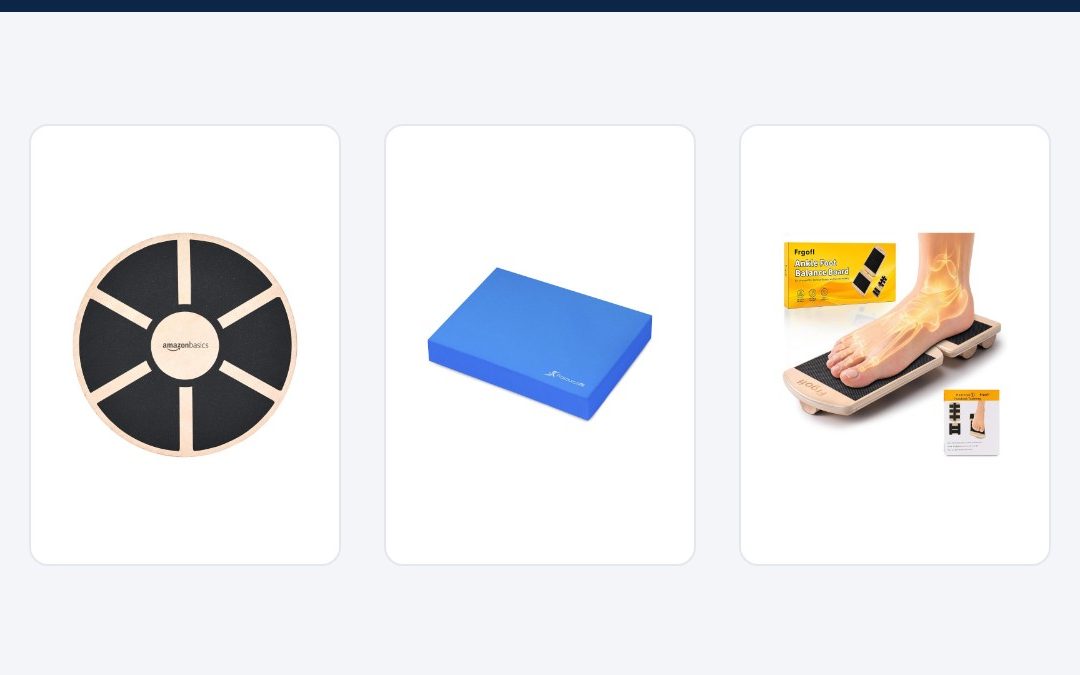
 Best overallAmazon Basics Wood Wobble Board16,000+ ratingsCheck price on Amazon →
 Best for beginners and rehabProsourceFit Balance Pad4.8★ · 17,000+ ratingsCheck price on Amazon →
Home fitness · 2026
The best balance boards
Balance boards train the small muscles around your ankles, knees and hips that keep you steady, and they make your core work hard to keep you upright. Athletes use them to prevent ankle sprains, physical therapists use them for rehab, office workers use them at standing desks, and surfers and snowboarders use them to stay sharp off-season.
We compared the best-selling balance trainers on Amazon on stability, difficulty, durability and what tens of thousands of buyers say. Below is one clear pick for each need, plus beginner exercises and safety tips.
Quick answer: the best balance boards
- Best overallAmazon Basics Wood Wobble Board · 16,000+ ratings
- Best for beginners and rehabProsourceFit Balance Pad · 4.8★ · 17,000+ ratings
- Best adjustableFrgofl Adjustable Balance Board · change difficulty
If you want one answer: buy the Amazon Basics Wood Wobble Board. It is a classic round wobble board with a slip-resistant top that tilts in every direction, rated by more than 16,000 buyers. If you are starting from scratch or recovering from an ankle injury, the softer ProsourceFit Balance Pad is easier and safer.
Types of balance trainers
| Type | How it moves | Difficulty | Best for |
|---|---|---|---|
| Balance pad | Soft foam squishes underfoot | Easiest | Beginners, seniors, rehab |
| Wobble board | Round, tilts 360 degrees | Medium | Ankle strength, general balance |
| Rocker board | Tilts one direction | Easy to medium | Standing desks, beginners |
| Roller board | Board on a rolling cylinder | Hardest | Surf, skate and snowboard training |
The best balance boards, reviewed
Amazon Basics Wood Wobble Balance Trainer Board
You need this if: you want a simple, sturdy wobble board for ankle strength, balance and core.
- TypeRound wobble board
- TopSlip-resistant surface
- MaterialWood
- Rating4.6★, 16,000+ ratings
Why we recommend it: It is one of the best-selling balance boards on Amazon. The round base tilts in all directions, which trains ankles and hips more completely than a rocker board, and the wood board feels solid underfoot.
Keep in mind: Wobble boards are harder than balance pads. Hold a wall or counter at first.
ProsourceFit Exercise Balance Pad
You need this if: you are new to balance training, recovering from injury, or want gentle stability work.
- TypeFoam balance pad
- SurfaceNon-slip, cushioned
- UseRehab, physical therapy, seniors, yoga
- Rating4.8★, 17,000+ ratings
Why we recommend it: Foam pads make standing harder in a gentle, safe way. They are widely used in physical therapy for ankle and knee rehab, and this one has an outstanding 4.8-star rating. It also works as a kneeling pad for floor exercises.
Keep in mind: Advanced users will find it too easy and move on to a wobble board.
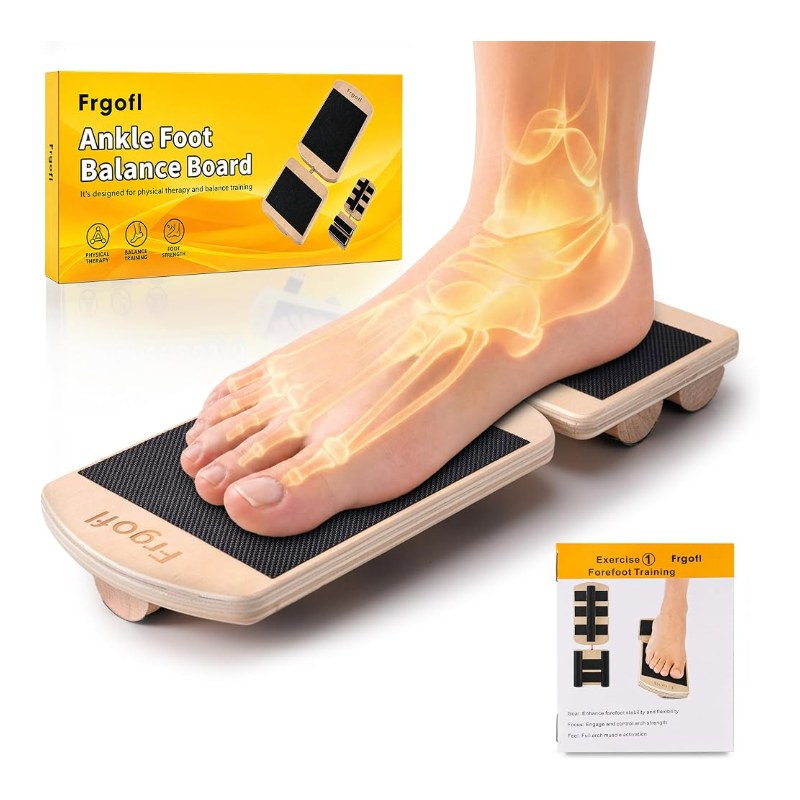
Frgofl Adjustable Balance Board
You need this if: you want to start easy and increase difficulty over time.
- FeatureAdjustable difficulty (per listing)
- UseAnkle strengthening, stability
- Rating4.4★, about 250 ratings
Why we recommend it: Adjustable boards let you change how far the board tilts, so one board can take you from beginner to more advanced balance work. Good for households where several people of different levels will use it.
Keep in mind: Newer product with far fewer reviews than our other picks.
Balance boards compared
| Board | Type | Difficulty | Rating |
|---|---|---|---|
| Amazon Basics wobble | Wobble | Medium | 4.6★ (16,000+) |
| ProsourceFit pad | Foam pad | Easy | 4.8★ (17,000+) |
| Frgofl adjustable | Adjustable | Easy to medium | 4.4★ (250) |
Beginner balance exercises
- Two-foot stand: stand in the middle with feet hip-width apart, hold 30 seconds.
- Front-back tilts: slowly tilt forward and back without the edge touching.
- Side-to-side tilts: same, left and right.
- Circles: roll the edge around in a slow circle, both directions.
- Mini squats: bend knees to 45 degrees and stand up, staying balanced.
- Single-leg stand (pad only at first): 20 to 30 seconds each leg.
Do 5 to 10 minutes most days. Hold a wall or chair until you feel confident.
Benefits of balance training
Balance work strengthens the stabilising muscles and improves proprioception, your body’s sense of where it is in space. For athletes, that means fewer rolled ankles and better control when cutting and landing. For older adults, better balance reduces the risk of falls. For desk workers, gentle movement on a board keeps legs active while standing. It also makes your core work constantly, without any crunches.
Balance boards for athletes
Basketball, volleyball, soccer and tennis players are especially prone to ankle sprains. A few minutes on a wobble board several times a week is a common prevention routine recommended by trainers. Skiers, snowboarders and surfers use boards to keep balance skills sharp off-season. See our volleyball shoes and agility ladders for more training ideas.
Using a balance board at a standing desk
Standing on a board while working keeps your legs moving and can make standing more comfortable. Start with 10 to 15 minutes at a time on a rocker or gentle wobble board, and keep a mat nearby to step off onto. Avoid doing it while concentrating on difficult tasks at first.
Safety tips
- Use a board on a non-slip mat or carpet, not on a slick floor.
- Clear space around you and keep a wall or sturdy chair within reach.
- Wear grippy shoes or go barefoot, not socks.
- Stop if you feel dizzy or pain in an injured joint.
- Seniors and people with balance problems should start on a foam pad with support.
Our verdict
The Amazon Basics Wood Wobble Board is the best balance board for most people. Choose the ProsourceFit Balance Pad for beginners, seniors and rehab, and the Frgofl Adjustable Board if you want to change difficulty as you improve.
What is proprioception?
Proprioception is your body’s internal sense of position. Sensors in your muscles, tendons and joints constantly report how your feet, ankles and knees are positioned, and your brain makes tiny corrections to keep you upright. After an ankle sprain, these sensors and the reflexes they control are often weakened, which is why people who sprain an ankle once are more likely to sprain it again. Balance training retrains this system by giving it lots of small, safe challenges, which is why it is a cornerstone of ankle rehab and injury prevention.
A 4-week balance plan
Week 1: two-foot stands and slow tilts on a foam pad or wobble board, holding a support, 5 minutes a day. Week 2: add circles and mini squats, and try short periods without holding on. Week 3: practise single-leg stands on the floor or pad, 3 rounds of 30 seconds per leg, plus wobble board work. Week 4: combine everything, add catching a ball while balancing, and try closing your eyes for a few seconds on the pad (with support nearby).
Balance exercises for runners
Runners spend their whole run landing on one leg at a time, so single-leg stability matters. Try single-leg balance on a pad while swinging the other leg, single-leg mini squats and calf raises on a wobble board. Many runners find this reduces niggles in the ankles, knees and hips.
Balance boards for kids
Children love balance boards as a game, and they build coordination useful in every sport. Start with a rocker or wobble board on carpet, keep sessions short and fun, and always supervise. Balance challenges such as “how long can you stay level” turn training into play.
Balance board vs BOSU ball
A BOSU ball, a half dome of air on a flat base, is another popular balance tool. It is softer and more versatile for exercises like push-ups and lunges, but larger and pricier. A wobble board or balance pad is smaller, cheaper and focused on standing balance, which is what most people need. Many gyms use both.
Combining balance with strength
Once basic balance feels easy, add light weights. Hold a dumbbell while doing mini squats on a wobble board, or do single-leg Romanian deadlifts on a foam pad. These challenge balance and strength together, which carries over well to sports and daily life.
Common balance board mistakes
- Starting on a hard board without support and falling.
- Locking the knees; keep them soft and slightly bent.
- Looking down at your feet instead of a point ahead.
- Doing long sessions; short, frequent practice works better.
- Using the board on a slippery floor.
Balance boards for surfers and snowboarders
Board-sport athletes often prefer roller boards that mimic the feel of riding. If you surf, skate or snowboard, start with a wobble board to build foundation balance, then move to a roller-style board once you can control the wobble board easily. Always use a mat and clear space, as roller boards can shoot out from under you.
Balance boards as gifts
A wobble board or balance pad is an inexpensive, useful gift for runners, older relatives, desk workers and young athletes. See our best fitness gifts and gifts for runners.
Care and storage
Wipe the surface clean and store the board flat or on its edge against a wall. Foam pads can compress over time; replace them if they no longer spring back. Check wooden boards for cracks and keep them dry.
Value math
Balance trainers are among the cheapest fitness tools you can buy, and a few minutes a day can help prevent injuries that cost far more in time and money. That makes them one of the best-value purchases for athletes and active families.
Got questions?
Frequently asked questions
Do balance boards really work?
Yes. They strengthen stabilising muscles and improve balance, and are widely used in sports training and physical therapy.
How long should I use a balance board each day?
5 to 15 minutes most days is enough to see progress.
Are balance boards good for seniors?
Yes, starting with a foam pad and holding a support.
Wobble board or rocker board?
Wobble boards tilt in every direction and are more challenging; rocker boards tilt one way and are easier.
Can balance boards help with ankle sprains?
They are commonly used in rehab and prevention. Follow your physical therapist’s advice after an injury.
Can kids use balance boards?
Yes, with supervision. They are great for coordination.
How we chose
We did not test these boards ourselves. We compared the best-selling balance trainers on Amazon on type, difficulty, build and ratings, and read what tens of thousands of buyers said. This guide is not medical advice.

We research sports gear for players, coaches and sports parents. We compare specs, read verified buyer reviews and name one clear pick for each kind of player. How we pick · Affiliate disclosure