Updated October 29, 2026 · 8 min read
We earn a commission when you buy through our links, at no extra cost to you. How this works.
Short on time? Our picks
 Best overallGaiam Yoga Block4.8★ · 30,000+ ratingsCheck price on Amazon →
 Best firm blockSyntus Yoga Block4,800+ ratingsCheck price on Amazon →
Yoga · 2026
The best yoga blocks
Yoga blocks bring the floor closer to you. They make standing poses, forward folds and seated stretches accessible when your hands cannot reach the floor, support you in restorative poses, and add challenge in strength moves. Teachers use them in almost every class, and they are just as useful for Pilates, stretching and physical therapy at home.
We compared the best-selling yoga blocks on Amazon on material, density, grip, size and what tens of thousands of buyers say. Below is one clear pick for each need, plus how to use blocks in your practice.
Quick answer: the best yoga blocks
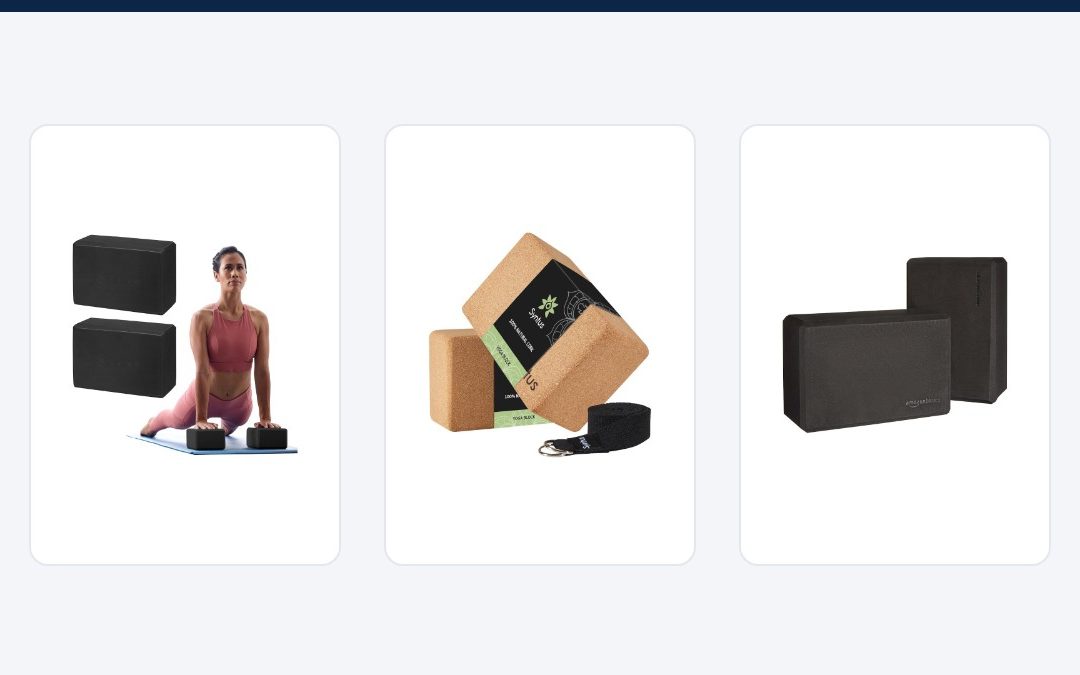
- Best overallGaiam Yoga Block · 4.8★ · 30,000+ ratings
- Best firm blockSyntus Yoga Block · 4,800+ ratings
- Best value pairAmazon Basics Yoga Blocks (2) · set of 2
- Best 2-packYoga Blocks 2 Pack · supportive non-slip foam
If you want one answer: buy the Gaiam Yoga Block. It is by far the best-selling yoga block on Amazon, with more than 30,000 ratings at 4.8 stars. It is a soft but supportive EVA foam block with a non-slip surface, light enough to carry to class. Most people benefit from two blocks, so consider buying a pair or the Amazon Basics set of 2.
Foam vs cork vs wood blocks
| Material | Feel | Best for |
|---|---|---|
| EVA foam | Light, soft, grippy | Most people, beginners, travel |
| High-density foam | Firmer, more stable | Balance and weight-bearing poses |
| Cork | Firm, heavy, eco-friendly | Stability, standing poses |
| Wood or bamboo | Hard, heavy | Advanced, very stable support |
Foam blocks, like all of our picks, are the most popular because they are light, comfortable under hands and knees, and affordable.
The best yoga blocks, reviewed
Gaiam Yoga Block
You need this if: you want a proven, comfortable block for yoga, Pilates and stretching.
- MaterialLatex-free EVA foam
- SurfaceSoft, non-slip
- SizeStandard (about 9 x 6 x 4 in)
- Rating4.8★, 30,000+ ratings
Why we recommend it: Gaiam is one of the best-known yoga brands, and this block has one of the strongest review records of any fitness product. It is supportive enough for standing poses, comfortable enough for restorative work, and comes in many colours.
Keep in mind: Foam blocks compress slightly under heavy loads; choose a firmer block or cork for weight-bearing poses.
Syntus Yoga Block
You need this if: you want a firmer, more stable foam block.
- MaterialHigh-density EVA foam
- UseYoga, Pilates, stretching, toning
- Rating4.7★, 4,800+ ratings
Why we recommend it: Syntus blocks are dense and stable, so they feel solid under hands in standing poses and when you put weight on them. A popular choice for people who find softer blocks too squishy.
Keep in mind: Slightly heavier than soft foam blocks.
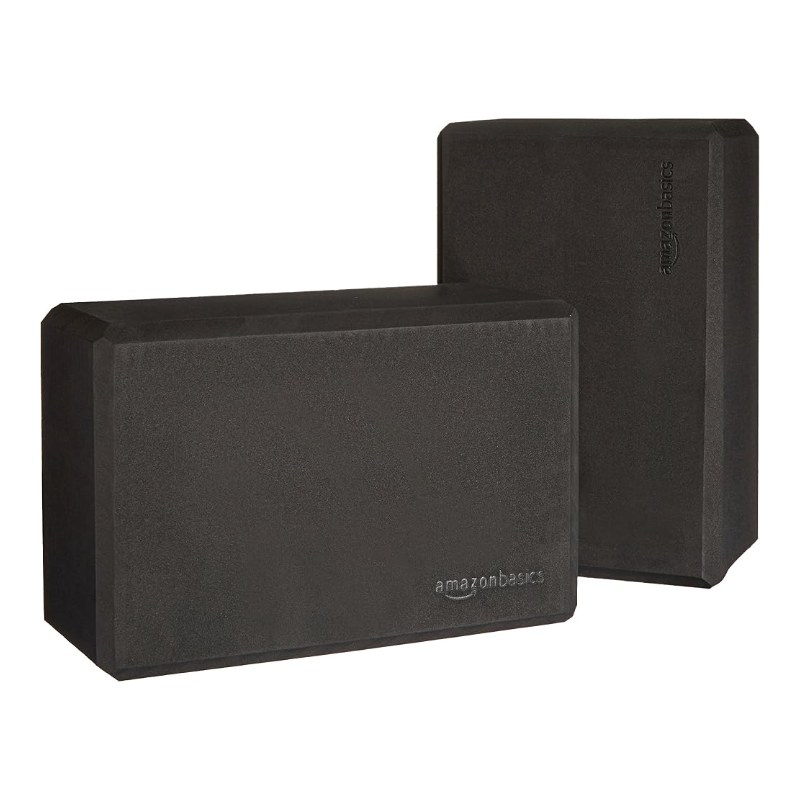
Amazon Basics Non-Slip Yoga Blocks (Set of 2)
You need this if: you want two blocks at a low price.
- Pack2 blocks
- MaterialFoam, non-slip
- Rating4.7★, 3,300+ ratings
Why we recommend it: Many poses use two blocks, one under each hand or for supported bridges, and this set gives you both at a great price.
Keep in mind: Basic design; fine for most home practice.
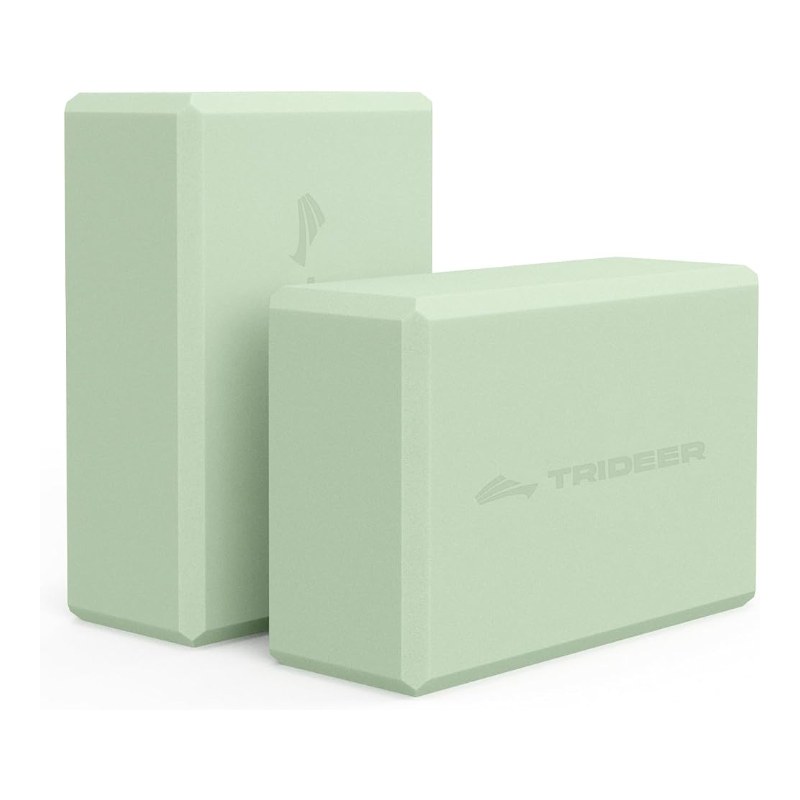
Yoga Blocks 2 Pack (Supportive Non-Slip Foam)
You need this if: you want a highly rated pair for yoga and Pilates.
- Pack2 blocks
- MaterialSupportive non-slip foam
- Rating4.7★, 3,700+ ratings
Why we recommend it: Another well-reviewed pair with a supportive feel, popular with home yoga and Pilates practitioners.
Keep in mind: Lesser-known brand; check colour and size options.
Yoga blocks compared
| Block | Pack | Best for | Rating |
|---|---|---|---|
| Gaiam | 1 (buy 2) | Most people | 4.8★ (30,000+) |
| Syntus | Varies | Firm support | 4.7★ (4,800+) |
| Amazon Basics | 2 | Value | 4.7★ (3,300+) |
| 2 Pack | 2 | Pairs | 4.7★ (3,700+) |
How to use yoga blocks
- Standing forward fold: place blocks under your hands so you can keep your back long.
- Triangle and half moon: rest your lower hand on a block instead of reaching the floor.
- Low lunge: hands on blocks beside the front foot to stay upright.
- Supported bridge: slide a block under your sacrum for a restful backbend.
- Seated poses: sit on a block to lift your hips and ease tight hips and hamstrings.
- Strength: squeeze a block between your thighs during bridges or core work.
Three block heights
A standard block has three heights depending on which side you place down: lowest flat, medium on its long edge, and tallest standing up. Start with the tallest height when you need the most support, then lower it as your flexibility improves. This makes blocks a great way to track progress over months.
Who should use yoga blocks?
Everyone. Beginners use them to reach poses safely, people with tight hamstrings or hips use them to keep good alignment, older adults use them for balance and support, and advanced practitioners use them to deepen poses and build strength. Runners and lifters often use blocks for post-workout stretching.
Pair your blocks with
A good mat and a strap complete a home yoga kit. See our best yoga mats, foam rollers and balance boards.
Our verdict
The Gaiam Yoga Block is the best yoga block for most people: comfortable, supportive and loved by more than 30,000 buyers. Choose the Syntus for a firmer feel, and the Amazon Basics or 2 Pack if you want a pair at a low price.
Why yoga teachers recommend blocks
Yoga is about alignment and breath, not about touching the floor. When hamstrings, hips or shoulders are tight, people often round their backs or lock their knees to reach a pose, which strains joints and misses the point. A block raises the floor so you can keep a long spine and steady breath while your flexibility develops. Teachers often say blocks are not a crutch but a tool, and many experienced practitioners use them every day for supported and restorative poses.
A 10-minute block routine
- Supported child’s pose: forehead on a block, 1 minute.
- Low lunge with blocks: hands on blocks either side of the front foot, 30 seconds each side.
- Half split: from the lunge, straighten the front leg with hands on blocks, 30 seconds each side.
- Standing forward fold: hands on blocks, 1 minute.
- Triangle: lower hand on a block, 30 seconds each side.
- Supported bridge: block under the sacrum, 2 minutes.
- Reclined butterfly: blocks under the knees, 2 minutes.
Yoga blocks for restorative yoga
Restorative yoga uses props to support the body completely, so muscles can relax. Blocks under the back, knees, hips or head allow you to rest in gentle backbends and hip openers for several minutes. It is a calming practice for evenings, recovery days and stress relief.
Yoga blocks for strength
Blocks are not just for flexibility. Squeeze a block between your thighs during bridges to activate the inner thighs and glutes, hold one overhead during core work, or place hands on blocks for deeper push-ups. In Pilates, a block adds resistance and alignment cues for many exercises.
Yoga blocks for older adults and rehab
Blocks make yoga and stretching accessible for older adults and people recovering from injury. Using the tallest setting under the hands reduces the depth of standing poses, and sitting on a block makes seated poses more comfortable for tight hips and knees. Physical therapists often recommend blocks for home stretching programs.
Yoga blocks as gifts
A pair of quality blocks with a strap or mat is an easy, useful gift for anyone who practises yoga or Pilates. See our best fitness gifts.
What to look for in a yoga block
Density: a good block should not squash flat when you lean on it. Press it firmly with your hand; it should give slightly and spring back. Grip: a textured, non-slip surface stops hands sliding in sweaty classes. Edges: bevelled or rounded edges are more comfortable under hands, hips and the back. Weight: light foam is easy to carry to class; heavier cork stays put on the mat. Size: 4 inch blocks give more height than 3 inch blocks, which helps beginners and taller people. Material: latex-free and odour-free foam is better for sensitive users.
Common mistakes with blocks
- Using only one block when a pose calls for two.
- Placing the block too far forward, which pulls you off balance.
- Leaning heavy weight onto a soft foam block in standing poses.
- Skipping blocks out of pride; they help alignment at every level.
- Putting blocks on a slippery floor instead of a mat.
Yoga blocks for runners and lifters
Runners and strength athletes often have tight hamstrings, hips and calves. Blocks make post-workout stretches like half splits, pigeon pose and supported forward folds comfortable and effective, so you can hold them long enough to help. A few minutes of block-supported stretching after training is an easy habit that many athletes find helps them feel looser the next day.
Care and storage
Wipe foam blocks with a damp cloth and mild soap after sweaty sessions, then let them air dry before stacking. Keep them out of direct sun, which can fade and harden foam. Cork blocks can be wiped clean and occasionally sanded lightly if the surface becomes slick.
Value math
Yoga blocks are one of the cheapest pieces of fitness equipment you can buy, yet they get used in almost every session. A pair lasts for years, which makes the cost per use tiny.
Got questions?
Frequently asked questions
Do I need one or two yoga blocks?
Two is best, as many poses use a block under each hand.
Foam or cork yoga blocks?
Foam is lighter and softer; cork is firmer and heavier. Most people start with foam.
Are yoga blocks good for beginners?
Yes. They make poses more accessible and help you keep good alignment.
What size yoga block is standard?
About 9 x 6 x 4 inches; some are 3 inches thick.
Can you use yoga blocks for Pilates?
Yes. They are great for support and resistance in Pilates and stretching.
How do I clean a yoga block?
Wipe with a damp cloth and mild soap, then let it air dry.
How we chose
We did not test these blocks ourselves. We compared the best-selling yoga blocks on Amazon on material, firmness, pack size and ratings, and read what tens of thousands of buyers said. We chose one block for each need.

We research sports gear for players, coaches and sports parents. We compare specs, read verified buyer reviews and name one clear pick for each kind of player. How we pick · Affiliate disclosure