Updated October 26, 2026 · 9 min read
We earn a commission when you buy through our links, at no extra cost to you. How this works.
Short on time? Our picks
 Best overall9-Hole Pitching Net with Strike Zone4.6★, 4 heightsCheck price on Amazon →
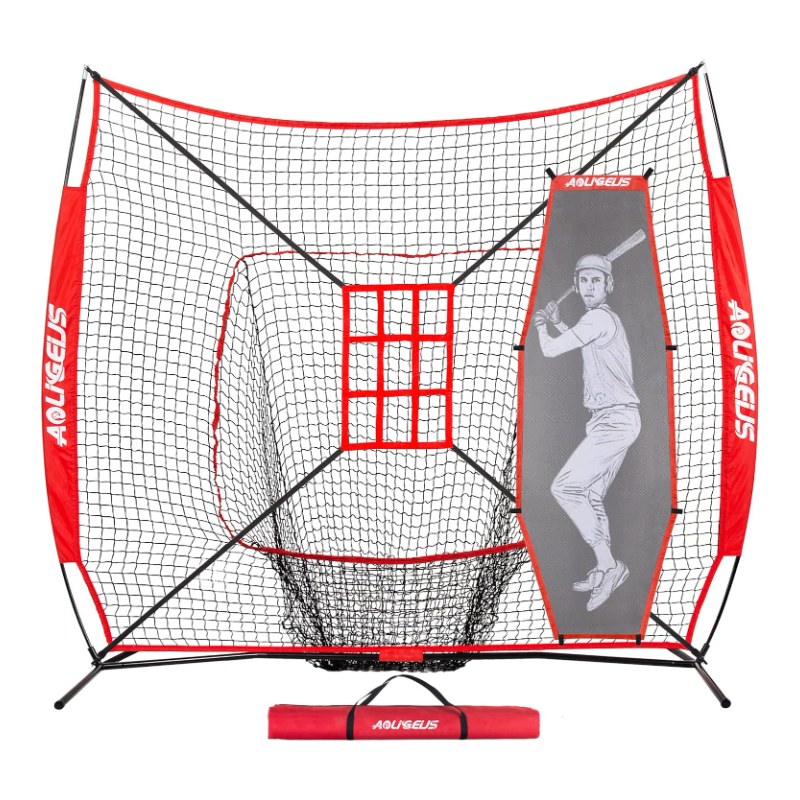 Best for pitching and hitting7 x 7 ft Practice Net with Strike Zone580+ ratingsCheck price on Amazon →
Every young pitcher needs one thing more than anything else: lots of throws at a target. But catchers get tired, parents’ knees give out, and wild pitches end up rolling into the street. A pitching net with a strike zone solves all of that. It gives a pitcher a clear target, catches every throw and lets them practice alone for as long as they want.
This guide picks the best pitching nets with strike zone for baseball and softball, from 9-hole target nets to 7 x 7 nets that double as hitting nets. We also cover pitching distances by age, the size of a real strike zone and simple drills that make backyard practice count.
Best overall
9-Hole Pitching Net with Strike Zone
A sturdy 9-pocket target net with a thick alloy frame and four adjustable heights, so the strike zone can match players of different sizes.
Rated 4.6★ by more than 260 buyers, who praise its quality, durability, easy assembly and value.
Quick answer: the best pitching nets with strike zone
- Best overall9-Hole Pitching Net with Strike Zone · 4.6★, 4 heights
- Best for pitching and hitting7 x 7 ft Practice Net with Strike Zone · 580+ ratings
- Best all-in-one set7 x 7 ft Net with Batting Tee and Strike Zone · net, tee, target
- Best heavy-dutyHeavy-Duty Pro 9-Hole Pitching Net · regulation-size zone
Pick by what you need
9-Hole Pitching Net
Nine pockets let pitchers aim at specific spots in the zone, the best way to build command.
7 x 7 ft Net with Strike Zone
A big net for hitting, with an attachable strike zone for pitching practice.
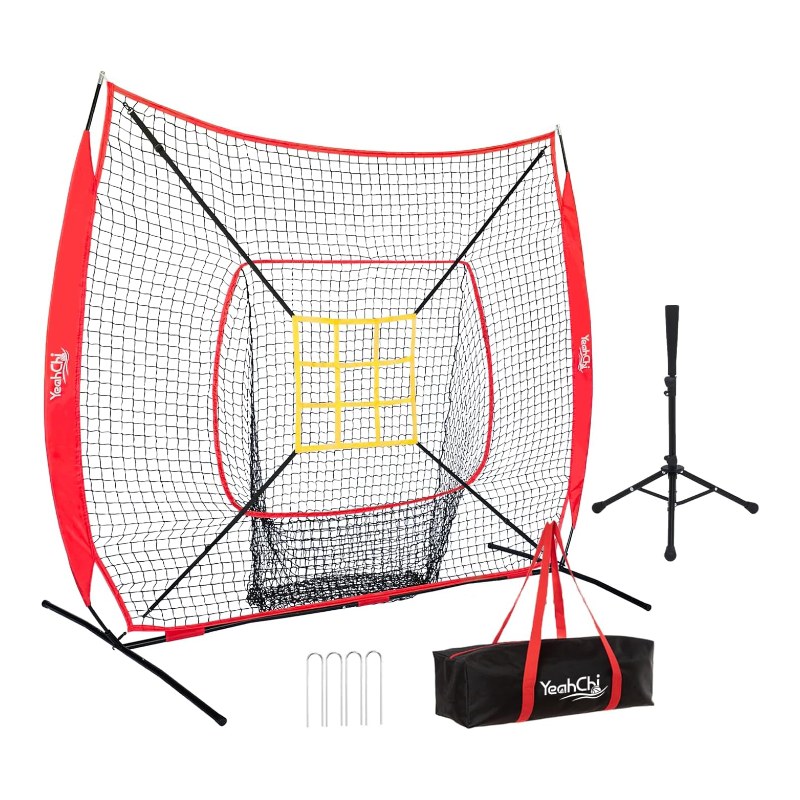
7 x 7 ft Net with Tee and Strike Zone
A net, a batting tee and a strike zone in one box for young players.
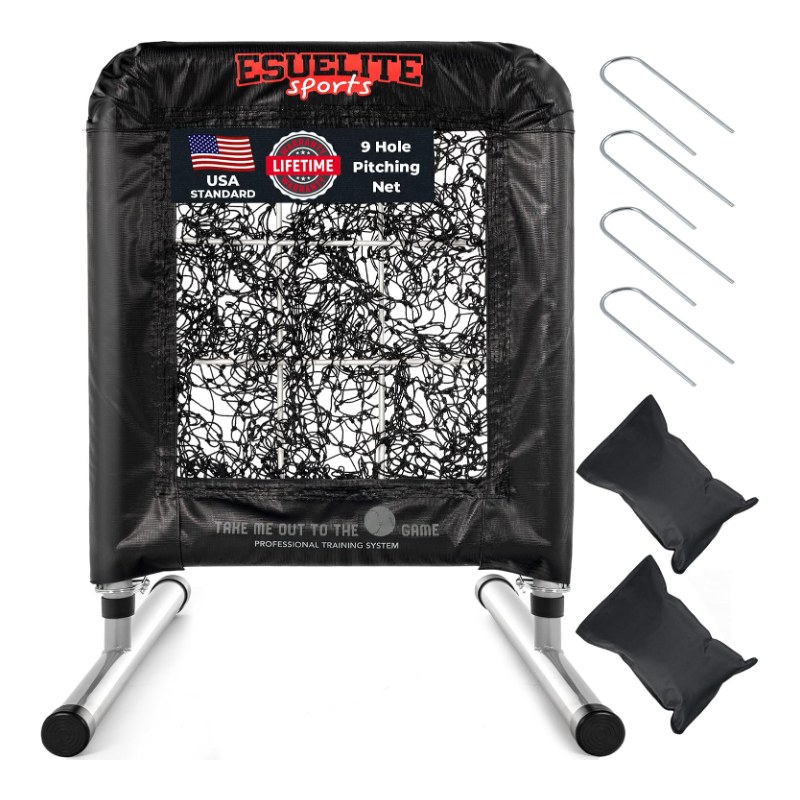
Heavy-Duty Pro 9-Hole Net
A sturdier 9-hole net with a regulation-size strike zone for older and harder throwers.
The best pitching nets with strike zone, reviewed
9-Hole Pitching Net with Strike Zone
You need this if: you want to build real pitching accuracy by aiming at specific spots.
- Targets9 pockets
- FrameThick alloy
- Heights4 adjustable levels
- Rating4.6★ (260+ ratings)
Why we recommend it: Nine pockets turn practice into a game: call your spot, hit it, and the ball drops into the pocket. Four height settings let you match the strike zone to the batter size you are pitching to. Buyers mention quality, durability, easy assembly and value.
Keep in mind: A 9-hole net is for pitching only; it is not designed for hitting. Some buyers mention small build-quality issues.
7 x 7 ft Baseball Softball Practice Net with Strike Zone
You need this if: you want one net for both hitting and pitching practice.
- Size7 x 7 ft
- NettingKnotless polyester
- SetupFoldable, no tools
- Rating4.5★ (580+ ratings)
Why we recommend it: A large hitting net with a strike zone that attaches when you want to pitch. It is quick to set up and fold away, and buyers praise the quality, easy setup and how fun and useful it is for pitching practice.
Keep in mind: A few buyers received sets with missing parts, so check the box when it arrives. Durability reviews are mixed for very heavy use.
7 x 7 ft Training Net with Batting Tee and Strike Zone
You need this if: you are starting from scratch with a young player and want a net, tee and target together.
- Includes7 x 7 ft net, tee, strike zone
- ExtrasGround stakes
- ForBaseball and softball
- Rating4.7★ (250+ ratings)
Why we recommend it: Everything a young player needs for hitting and pitching practice in one box. Buyers mention the value and how useful it is as a practice aid.
Keep in mind: Durability gets mixed comments, so it suits kids and casual practice more than older players throwing hard.
Heavy-Duty Pro 9-Hole Pitching Net with Strike Zone
You need this if: you are an older or harder-throwing pitcher who needs a sturdier target.
- Targets9, regulation-size zone
- Heights4 adjustable levels
- BuildHeavy-duty frame
- Rating4.5★ (120+ ratings)
Why we recommend it: A sturdier 9-hole net with a regulation-size strike zone, made for players who throw hard and practice often. Buyers mention value, construction and that it is a good training tool.
Keep in mind: It costs more and has fewer reviews than our top pick.
Comparison table
| Net | Type | Best for | Rating |
|---|---|---|---|
| 9-hole net | Target net | Pitching accuracy | 4.6★ (260+) |
| 7 x 7 with strike zone | Hitting net plus zone | Pitch and hit | 4.5★ (580+) |
| 7 x 7 with tee | Net, tee, zone | Young players | 4.7★ (250+) |
| Heavy-duty 9-hole | Target net | Hard throwers | 4.5★ (120+) |
9-hole net or strike-zone hitting net?
A 9-hole net divides the strike zone into nine pockets. It is the best tool for command: pitchers learn to hit corners, work up and down and repeat their mechanics. It is not built for batted balls.
A hitting net with a strike zone is a large net for batting practice that adds a target for pitching. It is more versatile and great value if you want both, but the target is less precise than nine pockets.
If pitching is the main goal, choose a 9-hole net. If you want one net for everything, choose a 7 x 7 with a strike zone. For more hitting-focused options, see the best baseball hitting nets.
Pitching distance by age
| League or age | Typical pitching distance |
|---|---|
| Little League baseball, ages 9 to 12 | 46 ft |
| Intermediate baseball, about age 13 | 50 ft |
| Junior, high school and adult baseball | 60 ft 6 in |
| Youth fastpitch softball, 10U | About 35 ft |
| Youth fastpitch softball, 12U | About 40 ft |
| High school and older fastpitch | About 43 ft |
Distances vary by league and organization, so check your child’s league rules. For backyard practice, start a little closer than game distance to build confidence and good mechanics, then move back.
How big is the strike zone?
Home plate is 17 inches wide, so the strike zone is 17 inches across. Its height depends on the batter: in most youth and high school rules, it runs from around the knees to roughly the middle of the chest. That is why adjustable-height nets are useful: you can set the zone for the size of batter you face.
Pitching net drills
1. Call your spot
Before every pitch, call the pocket you are aiming for. Count how many you hit out of 10. Track it each week to see progress.
2. Around the zone
Hit each of the nine pockets in order. Restart if you miss. This builds focus and control.
3. Count game
Simulate an at-bat: start at 0-0 and work the count. Hits on the corners are strikes; misses are balls. Try to get to strike three before ball four.
4. Low and away
Spend a set of 10 throws just on the two low pockets. Pitching low is one of the most valuable skills for young pitchers.
 ▶ Must Do Youth Baseball Pitching Drills For Beginner Pitchers
Simple pitching drills for beginner and youth pitchers. The video loads from YouTube only when you press play.
Protecting young arms
A pitching net makes it easy to throw a lot, so it is important not to overdo it. Follow your league’s pitch count guidelines, such as Little League and USA Baseball Pitch Smart, and give young pitchers rest days. Warm up before pitching and stop if your child has arm pain. Quality throws with good mechanics matter much more than high numbers.
How to set up a pitching net
- Choose flat ground with a backstop behind the net, like a fence, in case of misses.
- Assemble the frame and attach the target, then stake it down if stakes are included.
- Set the target height for the batter size you want to pitch to.
- Measure and mark the pitching distance for the player’s age.
- Check that no windows, cars or people are behind or beside the net.
What to look for in a pitching net
- Target type: nine pockets for precise command, or a single strike-zone target for general accuracy.
- Adjustable height: lets you set the zone for smaller or taller batters, and for baseball or softball.
- Frame strength: older players who throw hard need thicker frames and stronger netting.
- Portability: foldable frames and carry bags make it easy to take the net to the park or field.
- Ball return: pocket nets hold balls until you collect them; flat nets let balls drop to the ground.
Using a pitching net with a catcher
A net is great for solo practice, but young pitchers still need to throw to a real catcher sometimes, to practice pitching to a target that moves and to work on holding runners. Many families use the net for most practice and a parent or teammate as catcher once a week. If your child catches too, see our guide to the best youth catcher’s gear sets.
How to look after a pitching net
- Take the net down or cover it when not in use; sun and rain weaken netting.
- Check the frame joints and pockets regularly for wear or tears.
- Collect balls after each session so they do not stretch the pockets.
- Store it dry and indoors over the winter.
Softball pitching nets
Most nets in this guide are sold for both baseball and softball. Fastpitch pitchers throw from a shorter distance and the ball rises and drops differently, so adjustable target height is especially useful. Softballs are bigger, so check that target pockets are large enough for 11 or 12 inch softballs.
Free tool: Keep young arms healthy with our free pitch count calculator, with daily limits and rest days by age.
Got questions?
Frequently asked questions
What is the best pitching net with a strike zone?
The 9-Hole Pitching Net with Strike Zone is our top pick for building pitching accuracy. Choose a 7 x 7 net with a strike zone if you also want to practice hitting.
Is a 9-hole pitching net worth it?
Yes, if pitching accuracy is your goal. Nine pockets let pitchers aim at specific spots and track progress.
What is the pitching distance for Little League?
Little League baseball for ages 9 to 12 uses 46 feet. Older levels move back to 50 feet and then 60 feet 6 inches.
How wide is the strike zone?
Home plate is 17 inches wide, so the strike zone is 17 inches across. Its height depends on the batter.
Can I use a pitching net for hitting?
A 9-hole target net is not designed for batted balls. A 7 x 7 hitting net with a strike zone works for both.
Do pitching nets work for softball?
Most do. Check that target pockets are big enough for softballs and that the height adjusts for fastpitch.
How many pitches should a kid throw?
Follow your league’s pitch count rules and guidelines like Pitch Smart, and give young pitchers rest days.
How far should the pitching net be from the pitcher?
Use the game distance for the player’s age, or start a little closer for beginners and move back as accuracy improves.
How we chose
We researched pitching nets on Amazon in October 2026 and compared ratings, the number of reviews, target type, adjustability and what buyers say about quality, setup and durability. We chose one clear option for each type of player. Prices and included parts change often, so check the current listing before you buy.

We research sports gear for players, coaches and sports parents. We compare specs, read verified buyer reviews and name one clear pick for each kind of player. How we pick · Affiliate disclosure