Updated November 24, 2026 · 9 min read
We earn a commission when you buy through our links, at no extra cost to you. How this works.
Red light therapy panels shine red and near-infrared light on your skin and muscles, and they have gone from clinic equipment to one of the most searched home recovery tools this year. The evidence is strongest for skin, with more modest and mixed results for muscle recovery and joint pain, so it’s worth knowing what a home panel can realistically do before you buy one.
If your knees, back or shoulders feel stiff and achy by evening, or your skin just looks tired, a red light panel is one of the few recovery tools you can use from a chair while scrolling your phone — no gym, no appointment, no change of clothes. Ten to twenty minutes a few times a week, standing a couple of feet away, is the whole routine.
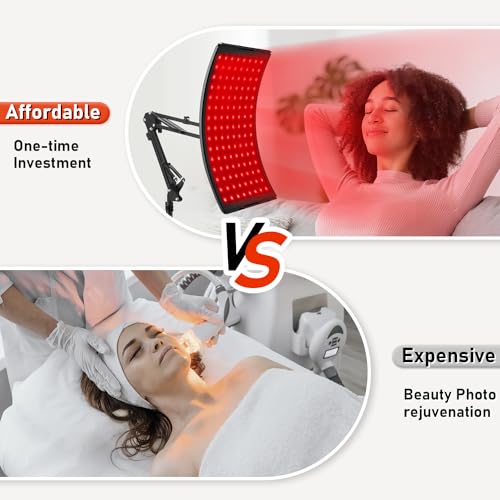
It is also one of the few wellness purchases that keeps paying off: once you own the panel, every session costs nothing, compared to $30–$80 per visit at a red light or infrared studio.
Our pick: Red Light Therapy Panel with Stand
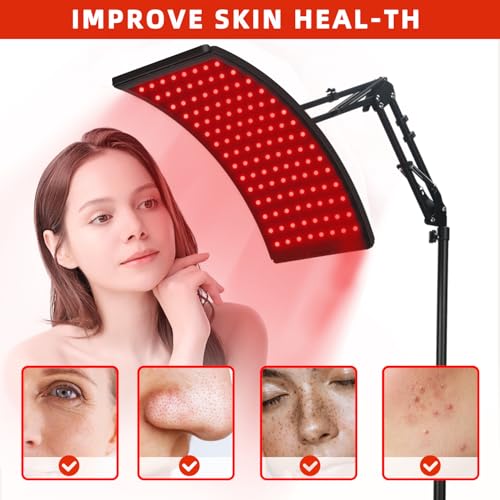
You need this if: you want a straightforward, free-standing panel for your face and body without building a dedicated red-light room.
- Wavelengths: 660nm red light plus 850nm near-infrared, the combination most home research focuses on
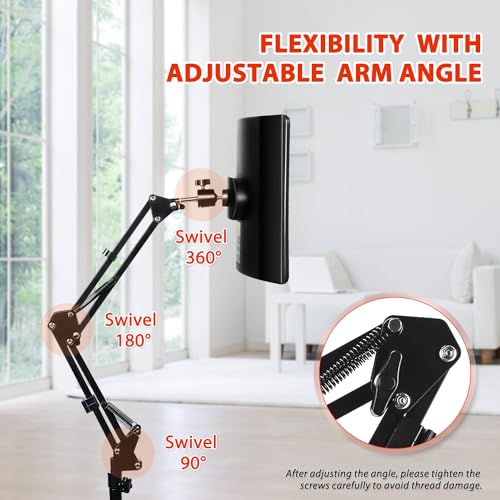
- Stand: included, so you can angle it at your face, back or legs without holding it
- Use: sits a short distance from skin for each session
It comes with the panel, the floor stand, and a power cable — no separate purchase needed to start using it the same day it arrives. The stand’s adjustable height is worth using fully: tilting the panel to face you at seated or standing height, rather than propping it on a shelf at the wrong angle, makes a real difference in how much of the light actually reaches your skin.
Check the Red Light Panel on Amazon →
Does red light therapy actually work?
It depends what you’re using it for. The best-supported home use is skin: several studies link regular red light exposure to modest improvements in skin tone and fine lines. For muscle recovery and joint discomfort, the research is smaller and more mixed, and in-clinic devices are generally more powerful than home panels. Treat a home panel as a relaxing recovery habit with some real evidence behind the skin benefits, not a guaranteed fix for pain or injury.
Clinical interest in red and near-infrared light goes back decades in dermatology and physical therapy settings, where it’s used to support wound healing, reduce inflammation and ease joint pain. Home panels use the same wavelengths at a lower, consumer-safe intensity — which is why consistency (more short sessions over weeks) matters more than any single session’s strength.
Why people stick with it after the first week
Red light panels succeed where other recovery gear gets abandoned, for a few practical reasons:
- Zero effort required: you stand or sit in front of it — no stretching, no technique, nothing to get wrong.
- Fits into time you already have: brush your teeth, check email, or just stand there for ten minutes.
- Targets the whole body, not one spot: a full panel covers shoulders to hips in one session instead of moving a small handheld device around.
- No ongoing cost: unlike studio sessions or supplements, the only cost after buying it is a few cents of electricity.

Common buying mistakes people make with red light panels, and what actually matters.
How to choose a red light therapy panel
Check the irradiance, not just the wattage
Irradiance (measured in mW/cm² at a given distance) tells you how strong the light actually is where your skin sits. A high wattage number means little without a stated irradiance and distance, since a large panel spreads the same power over more area.
A useful shortcut when comparing panels: look for a brand that publishes an irradiance chart at multiple distances (6″, 12″, 24″) rather than a single bold wattage number on the box. Brands confident in their output tend to show the real data.
Look for both red and near-infrared
Red light (around 660nm) targets skin more directly, while near-infrared (around 850nm) penetrates deeper toward muscle. Panels that combine both wavelengths cover more use cases than a single-wavelength light.
Size and coverage
A larger panel treats more of your body per session (back, legs), while a compact panel is better suited to the face or a single joint. Match the size to what you actually plan to treat most often.
Safety features
Protective eyewear is recommended with some panels; check whether one is included. A timer helps you keep sessions consistent instead of guessing.
How to use a red light panel
- Clean, dry skin, with no sunscreen or makeup over the treated area.
- Sit or stand at the distance the panel’s instructions recommend, usually 6 to 24 inches.
- Start with shorter sessions, around 5 to 10 minutes, a few times a week.
- Build up gradually to the manufacturer’s suggested session length once you know how your skin responds.
A simple routine that works for most people: stand 6–12 inches away for facial or skin-focused sessions, or 12–24 inches for a broader muscle-and-joint session, for 10–20 minutes. Rotate which side of your body faces the panel halfway through if you’re targeting a specific area like a shoulder or knee.
Who should be careful with red light therapy?
Check with a doctor first if you are pregnant, take medication that increases light sensitivity, or have a condition affecting your skin or eyes. Avoid shining any panel directly into your eyes without protection. This is a wellness tool, not a medical treatment for a diagnosed condition.
If you are pregnant, on medication that increases light sensitivity, or have a history of skin cancer, check with a doctor before starting regular sessions — red light therapy is generally considered low-risk, but it is still worth a quick conversation given it’s cumulative daily exposure.
Mistakes that waste a red light session
- Standing too far away. Light intensity drops off fast with distance — most panels need you within 6–24 inches to get a meaningful dose.
- Being inconsistent. Red light therapy works cumulatively; one session every couple of weeks won’t show the results that 3–5 short sessions a week will.
- Through clothing. Light needs to reach bare skin to do anything — using it over a shirt mostly wastes the session.
- Chasing the biggest panel first. A smaller, well-positioned panel used consistently beats an oversized one that’s awkward to fit into a daily routine.
Red light vs. infrared sauna vs. heating pad
| Red light panel | Infrared sauna blanket | Heating pad | |
|---|---|---|---|
| What it does | Light-based cellular stimulation | Whole-body heat + some infrared | Surface heat only |
| Session length | 10–20 min | 30–45 min | 15–30 min |
| Where it works | Skin surface and shallow tissue | Whole body, sweat-based | Local area only |
| Best for | Skin, joints, muscle recovery | Relaxation, detox feel, warmth | Quick localized pain relief |
These aren’t competing purchases so much as different tools — some people run both a panel and a sauna blanket as part of the same recovery routine.
Getting the most from your panel
- Keep the lens clean. Wipe the LED face with a dry or barely damp cloth; built-up dust can noticeably cut output over time.
- Give it space to breathe. Most panels use passive cooling, so avoid pressing it right against a wall or fabric that blocks airflow.
- Track your sessions. A simple note on your phone of day and duration makes it much easier to actually hit 3–5 sessions a week instead of guessing.
Got questions?
Frequently asked questions
How long until you see results from red light therapy?
Skin studies generally use several weeks of consistent, regular sessions before assessing results. Don’t expect a visible change after one or two uses.
Is a home red light panel as strong as an in-clinic device?
Usually not. Clinic devices are typically more powerful, though home panels have improved and can still deliver a meaningful dose with longer or more frequent sessions.
Do you need to wear eye protection?
It’s recommended for close-range or longer sessions, especially with higher-powered panels. Check your specific panel’s instructions.
See more recovery gear in our shop, or browse the full sports gear shop.
Can you use red light therapy every day?
Most manufacturers and studies support daily use, though many people land on 3–5 sessions a week once the novelty wears off. More isn’t necessarily better past a certain point — consistency matters more than frequency.
Does red light therapy help with hair or skin specifically?
Red light is the wavelength most associated with skin and collagen-related benefits, while near-infrared penetrates deeper for muscle and joint use — a panel with both covers more use cases than a red-only light.
Where to put it in a small space
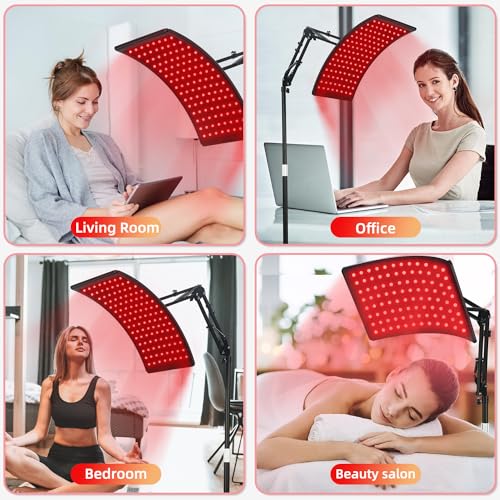
You don’t need a dedicated room. A red light panel on its stand fits next to a bedroom mirror, a home office corner, or even a bathroom if there’s an outlet nearby. The main requirement is enough floor clearance to stand 1–2 feet back, which most bedrooms and offices already have without rearranging furniture.
Some people mount a smaller panel on a wall instead of using the floor stand, which frees up space entirely — worth checking whether your model supports wall mounting if floor space is tight.

Will it heat up my room?
LED red light panels run warm to the touch but don’t meaningfully heat a room the way an infrared sauna blanket does — most of the energy goes into light output, not ambient heat.
Can I use it while working at a desk?
Yes, many people position a panel to the side of a desk or monitor for a passive session during work, as long as the light isn’t shining directly into your eyes for extended periods.
Worth adding to your routine?
A red light panel asks very little of you — stand in front of it for ten minutes a few times a week — which is exactly why it survives in people’s routines long after flashier gear gets packed away. Check the irradiance, confirm it covers both wavelengths, and give it a few consistent weeks before judging the results.
Does the color of light matter, or is it all marketing?
It matters. The specific wavelengths (roughly 630–660nm for red, 810–850nm for near-infrared) are what most of the research is actually based on. A panel advertised simply as “red light” without published wavelength numbers is harder to evaluate against that research than one that lists its exact output.
Is it safe for sensitive skin or rosacea?
Red light therapy is generally well tolerated by sensitive skin and is sometimes recommended for calming redness and inflammation, but as with any new skin routine, patch-test a short session first and stop if you notice irritation.
Between the setup, the consistency it rewards, and the low day-to-day effort, a red light panel earns a spot in a home recovery routine faster than most equipment that requires a workout to go with it.
Red light therapy for athletes and active recovery
Beyond general wellness use, red light panels have become a fixture in athlete recovery routines alongside foam rolling and stretching. The logic is straightforward: near-infrared wavelengths reach deep enough to interact with muscle tissue, which is why many people use a panel right after a hard training session rather than first thing in the morning.
A practical routine for active users: 10–15 minutes on the muscle group worked that day, ideally within a couple of hours of training, three to five times a week. It’s not a replacement for warming up or cooling down properly, but it slots in well alongside them rather than adding real time to a routine that’s already tight.

We research sports gear for players, coaches and sports parents. We compare specs, check maker information and owner feedback, and name one clear pick for each kind of player. How we pick · Affiliate disclosure