Updated November 23, 2026 · 9 min read
We earn a commission when you buy through our links, at no extra cost to you. How this works.
A rowing machine is one of the few home cardio machines that works your legs, back, core and arms in a single stroke, without the impact of running. A magnetic rower uses adjustable magnets next to the flywheel instead of air or water, so it is quiet enough to use early in the morning without waking the house, which is why it is the most popular style for apartments and shared homes.
If you’ve put off cardio because running wrecks your knees or the gym is too far away to bother with most days, a rowing machine solves both problems at once. It’s full-body (legs, back, arms and core all in one stroke), it’s easy on your joints, and it folds up or tucks against a wall when you’re done — no excuses left for skipping a workout.
A magnetic rower specifically means no splashing, no hissing air, and barely any sound — you can row at 6am without waking anyone up, which is exactly why it’s become the most popular style for home use.
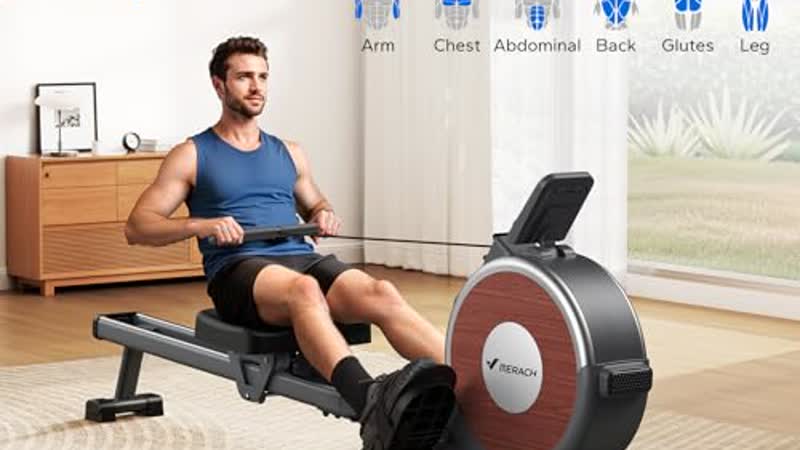
Our pick: Merach Magnetic Rowing Machine (Q1S)
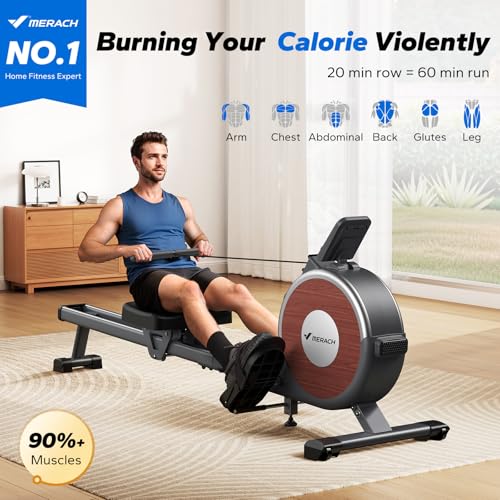
You need this if: you want a quiet, space-saving rower for daily cardio and don’t need a commercial air rower’s harder top-end resistance.
- Resistance: 16 magnetic levels, adjusted by a dial, no motor noise
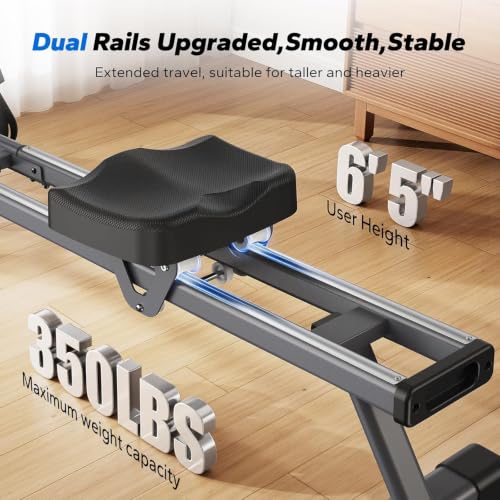
- Capacity: rated up to 350 lb
- Rail: dual slide rail for a smoother, more stable stroke
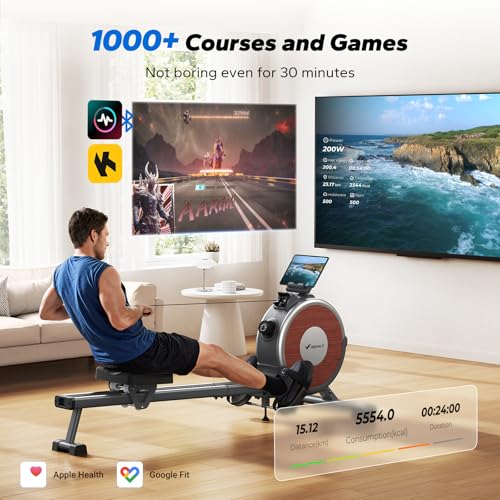
- Extras: LCD monitor tracks time, distance, calories and stroke count; app compatible
What makes this one easy to recommend is how little setup and fuss it involves. It arrives mostly assembled, the magnetic resistance never needs maintenance the way air or water rowers eventually do, and the dual rail keeps the seat gliding smoothly even after months of daily use — no wobble, no squeaking, no replacing parts. For a machine you’re meant to use most days of the week, that reliability matters more than any extra feature.
Check the Merach Rower on Amazon →
What rowing actually works, stroke by stroke
Each stroke breaks down into two simple phases, and knowing them helps you feel why it works so many muscles at once:
- The drive (power phase): legs push first (quads, glutes, hamstrings), then your core and back extend, and finally your arms pull the handle in — roughly 60% legs, 20% core, 20% arms and back.
- The recovery (reset phase): arms extend, body hinges forward, knees bend to slide back to the catch — this is where control matters more than speed.
Because the leg drive does most of the work, rowing builds real lower-body strength alongside cardio endurance — which is why it’s often recommended as a joint-friendly alternative to squats or lunges for people easing back into exercise.
Why a rowing machine earns its spot in a small space
It’s easy to buy fitness equipment that ends up as a clothes rack. A rower avoids that trap for a few concrete reasons:
- One machine, whole body: legs drive the stroke, your core stabilizes, your back and arms finish the pull — no need for a separate leg day and arm day.
- Joint-friendly by design: the seated, sliding motion puts far less impact on knees and hips than running or jumping cardio.
- Fast, real results: a focused 20-minute row burns comparable calories to a much longer jog, which matters when motivation (and time) is limited.
- It fits where other machines don’t: most magnetic rowers are under 20 inches wide and many stand upright against a wall when you’re finished.

A quick rundown of the features actually worth paying attention to before buying any rower.
How to choose a home rowing machine
Magnetic, air, water or hydraulic?
Magnetic rowers are quiet and smooth, and resistance is set with a simple dial rather than your own effort, which makes them easy to use consistently. Air rowers (like the Concept2) get harder the faster you pull, which many serious rowers prefer, but they are louder. Water rowers are quiet and have a pleasant feel but are bulkier and heavier. For most home users who want a quiet machine that doesn’t dominate the room, magnetic is the easiest fit.
| Magnetic | Air | Water | |
|---|---|---|---|
| Noise | Very quiet | Loud (whoosh) | Quiet (gentle splash) |
| Resistance feel | Consistent, dial-set | Scales with effort | Natural, scales with effort |
| Size/weight | Compact, often foldable | Medium to large | Large, heavier |
| Typical price | $ | $$ | $$$ |
Weight capacity and your own size
Check the rated weight capacity against your own weight with some margin, not right at the limit. Most home magnetic rowers are rated between 300 and 360 lb.
Don’t just check the maximum number — look at the rail length too. A taller rower can technically fit under the weight limit but still feel cramped if the slide is short, cutting their stroke length and the workout’s effectiveness short along with it.
Resistance levels
More levels give finer control over difficulty as you improve, but the number alone does not tell you how hard the top level actually feels — read the specific model’s reviews for that, since level counts are not standardized between brands.
Footprint and storage
Most home rowers fold or stand upright for storage. If floor space is tight, measure your folded storage spot before you buy, not just the space where you plan to row.
A simple 4-week rowing plan to build the habit
| Week | Sessions | Focus |
|---|---|---|
| 1 | 3 x 10 min | Learn the stroke: legs, then back, then arms, in that order |
| 2 | 3 x 15 min | Steady pace, focus on a smooth, controlled recovery |
| 3 | 4 x 15–20 min | Add short 30-second pushes every few minutes |
| 4 | 4 x 20 min | Mix steady rows with one interval session (e.g. 8 x 1 min hard / 1 min easy) |
By week four, most beginners notice real changes in stamina and have a feel for pacing — the hardest part is always the first two weeks of simply showing up.
Getting started: your first few rowing sessions
- Learn the stroke first, not the speed. Push with your legs, lean back slightly, then pull the handle to your chest — legs, body, arms, in that order. Reverse it on the way back.
- Start with intervals. Try 20 to 30 seconds rowing, 30 to 40 seconds resting, for 10 to 15 minutes in your first week.
- Keep resistance moderate at first. A lower magnetic level with good form beats a high level with a sloppy stroke.
- Build toward steady rows. Once the stroke feels natural, try continuous 15 to 20 minute sessions at a conversational pace.
Rowing form mistakes that waste your effort
Most of the frustration people have with rowing machines comes from form, not fitness level:
- Pulling with your arms first. The power should come from your legs pushing the seat back — arms and back finish the stroke, they don’t start it.
- Rounding your back. Keep your spine fairly neutral through the drive; hunching under resistance is the fastest way to a sore lower back.
- Rushing the recovery. Slide back to the catch slower than you drove away — roughly twice as slow. Rowing is not supposed to be a sprint on every single stroke.
- Setting the resistance too high early on. A higher magnetic number doesn’t mean a better workout; it just means worse form, faster.
Who should get a rower (and who might not need one)
A rowing machine is a strong pick if you want low-impact cardio and some strength work from one piece of equipment, you’re short on space, or you want quieter equipment than a treadmill. If your main goal is pure running performance or you specifically want to train for an upper-body-only sport, a rower is a great addition but not a total replacement for sport-specific training.
Keeping your rowing machine running smoothly
- Wipe the rail and seat after every session — sweat left to dry can make the slide sticky over time.
- Check the resistance dial and monitor battery occasionally; a loose dial is the most common reported issue on budget rowers.
- Store it upright if floor space is tight — most magnetic rowers are designed to fold or stand vertically.
Rowing machine vs treadmill vs exercise bike
| Rowing machine | Treadmill | Exercise bike | |
|---|---|---|---|
| Joint impact | Very low | Moderate to high | Low |
| Muscles worked | Full body | Mostly lower body | Mostly lower body |
| Noise | Low (magnetic) | Moderate to high | Low |
| Typical footprint | Small, often foldable | Large | Small to medium |
If you already own a treadmill or bike and want a second machine that covers your upper body too, a rower is the natural next addition rather than a straight replacement.
Got questions?
Frequently asked questions
Is a magnetic rowing machine good for beginners?
Yes. The resistance is set with a dial rather than your effort, so it is predictable and easy to adjust as you build fitness, and the quiet motion suits daily use at home.
Does rowing build muscle or just cardio?
Both. A rowing stroke uses your legs, back, core and arms together, so it combines cardio work with light full-body strength training.
How loud is a magnetic rowing machine?
Magnetic resistance has no motor and very little mechanical noise, which is why it is the common choice for early morning or late evening workouts in shared housing.
See more home cardio picks in our shop, or browse the full sports gear shop.
Can I lose weight with just a rowing machine?
Yes, combined with a reasonable diet. A 20–30 minute rowing session several times a week burns a meaningful number of calories and builds muscle that keeps your metabolism higher at rest, which supports steady weight loss over time.
Do I need special shoes or can I row barefoot?
Most magnetic rowers have adjustable foot straps that work with socks, barefoot or regular sneakers. Avoid shoes with thick, unstable soles since they can make it harder to feel the footplate through the drive.
How much space do I actually need around the machine?
Plan for the machine’s full length plus about 2 feet behind the seat for your slide, and a little extra width to swing your arms comfortably on the recovery.
Ready to add rowing to your routine?
Is 16 levels of resistance enough as I get stronger?
For the vast majority of home users, yes — 16 magnetic levels covers everything from a light recovery row to a genuinely tough interval session. Serious competitive rowers chasing a specific drag factor may eventually want an air rower instead.
Can two different-sized people in the same house both use it comfortably?
Yes, as long as the model’s weight capacity covers the heavier user and the footrests and handle height adjust reasonably — check the seat rail length is rated for taller users if anyone in the household is over 6’2″.
A quiet, compact rowing machine removes nearly every excuse for skipping cardio — no gym commute, no weather, no noise complaints. Pick your resistance type, check it fits your space, and you’ve got a full-body workout ready whenever you have 20 minutes to spare.

We research sports gear for players, coaches and sports parents. We compare specs, check maker information and owner feedback, and name one clear pick for each kind of player. How we pick · Affiliate disclosure