Updated October 27, 2026 · 9 min read
We earn a commission when you buy through our links, at no extra cost to you. How this works.
Short on time? Our picks
 Best overallZELUS Weighted Vest18,000+ ratingsCheck price on Amazon →
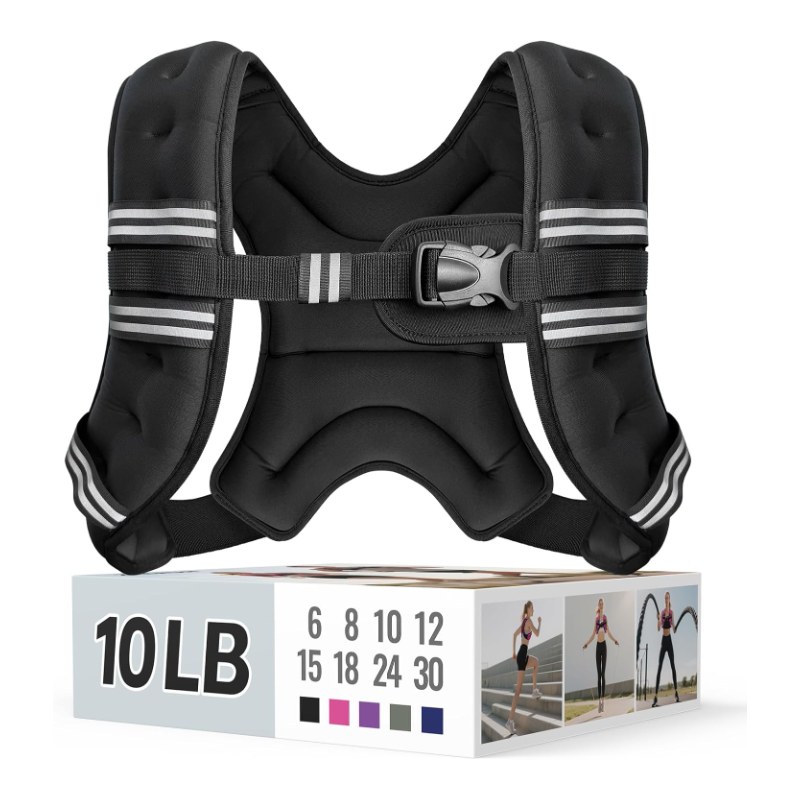 WalkingZeerun Weighted Vestpadded shouldersCheck price on Amazon →
Weighted vests are one of the biggest fitness trends of the year, and for good reason. Adding a little weight to a daily walk or a home workout makes it harder without extra time or impact. Women use them for walking and bone-friendly strength work, and men use them for rucking, calisthenics and conditioning.
We compared the best-selling weighted vests on Amazon on comfort, fit, weight options and what thousands of buyers say. Below you will find one clear vest for each goal, how heavy your vest should be, and how to start safely.
Best overall · 2026
ZELUS Weighted Vest
The best-selling weighted vest on Amazon, with even iron-sand fill, adjustable straps and options from 6 to 30 lb. Comfortable enough for daily walks.
Rated 4.5★ by more than 18,000 buyers, who mention comfort and fit most.
Quick answer: the best weighted vests
- Best overallZELUS Weighted Vest · 18,000+ ratings
- WalkingZeerun Weighted Vest · padded shoulders
- AdjustableERIC FLAG 40 lb · small weight steps
- Budget adjustableRUNFast Pro 40 lb · rucking and CrossFit
- Heavy trainingRUNmax Adjustable · up to 150 lb
- ValuePoudee Weighted Vest · low cost
How heavy should your weighted vest be?
| Your goal | Start with | Build up to |
|---|---|---|
| Walking (beginner) | About 5% of body weight | About 10% |
| Walking (fit) | About 10% of body weight | 10 to 15% |
| Home workouts and calisthenics | 5 to 10% | 15 to 20% |
| Rucking and hiking | 10% | 20% or more, slowly |
| Running | 5% or less | Keep it light |
Example: a 150 lb woman walking with a vest for the first time should start around 8 lb and build up to about 15 lb. A 200 lb man doing calisthenics could start around 15 to 20 lb. Start light, especially if you have joint or back problems, and increase only when your current weight feels easy.
Fixed or adjustable vest?
- Fixed-weight vests (ZELUS, Zeerun, Poudee) are slimmer, cheaper and more comfortable for walking. You buy the weight you want.
- Adjustable vests (ERIC FLAG, RUNFast, RUNmax) let you add or remove weights. They are better if you want to progress or share the vest with someone else.
Our rule of thumb: buy a fixed vest for walking and an adjustable vest for strength training.
The best weighted vests, reviewed
ZELUS Weighted Vest
You need this if: you want a comfortable, fixed-weight vest for walking, home workouts or light runs.
- Weights6 to 30 lb options
- FillIron sand, evenly spread
- FitAdjustable buckle straps
- Ratings4.5★, 18,000+
Why we recommend it: It is the best-selling weighted vest on Amazon, with more than 18,000 ratings. Buyers mention comfort, fit and versatility most, and the iron-sand fill spreads weight evenly across your chest and back. A reflective stripe helps on early-morning walks.
Keep in mind: Each vest is a fixed weight. “Weight” is a mixed topic because some buyers expected heavier or lighter; choose your weight carefully using the chart below.
Zeerun Weighted Vest
You need this if: you plan to walk with a vest most days and want soft, padded shoulders.
- Weights6 to 30 lb options
- FabricSkin-friendly neoprene
- ShouldersThickened pads
- Ratings4.5★, 4,700+
Why we recommend it: Thick shoulder pads and soft neoprene make it comfortable for long walks. Buyers praise the weight, comfort and quality.
Keep in mind: Like most fixed-weight vests, you will need a heavier vest later if you want to progress.
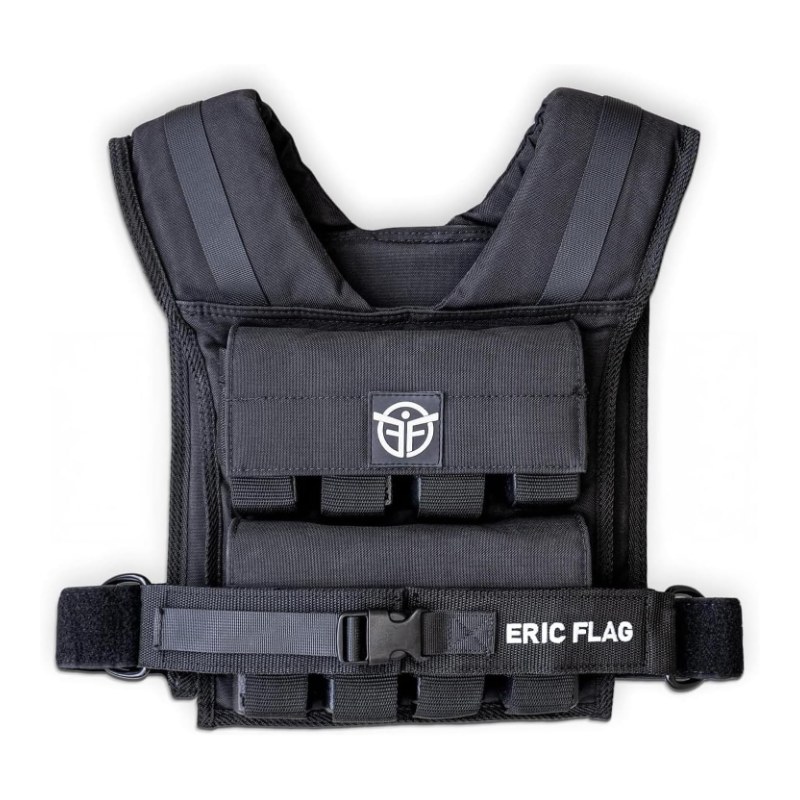
ERIC FLAG Adjustable Weighted Vest (up to 40 lb)
You need this if: you want one vest that grows with you, from light walks to heavy calisthenics.
- Weight0 to 40 lb
- Plates16 removable 2.4 lb iron weights
- Fabric1000D Oxford nylon
- Ratings4.7★, 1,100+
Why we recommend it: Removable iron weights let you add load in small steps as you get stronger. Buyers mention excellent weight distribution, adjustability and fit.
Keep in mind: It costs more than fixed vests, and at full weight it is heavy to put on.

RUNFast Pro Weighted Vest (40 lb)
You need this if: you want an adjustable vest for rucking, hiking or CrossFit at a lower price.
- WeightUp to 40 lb
- Steps4 lb increments
- FitOne size
- Ratings4.6★, 1,200+
Why we recommend it: A classic, simple adjustable vest with weights you add or remove in 4 lb steps. Buyers like its weight range, adjustability and quality.
Keep in mind: It is bulkier than slim fixed vests and may bounce more on runs.
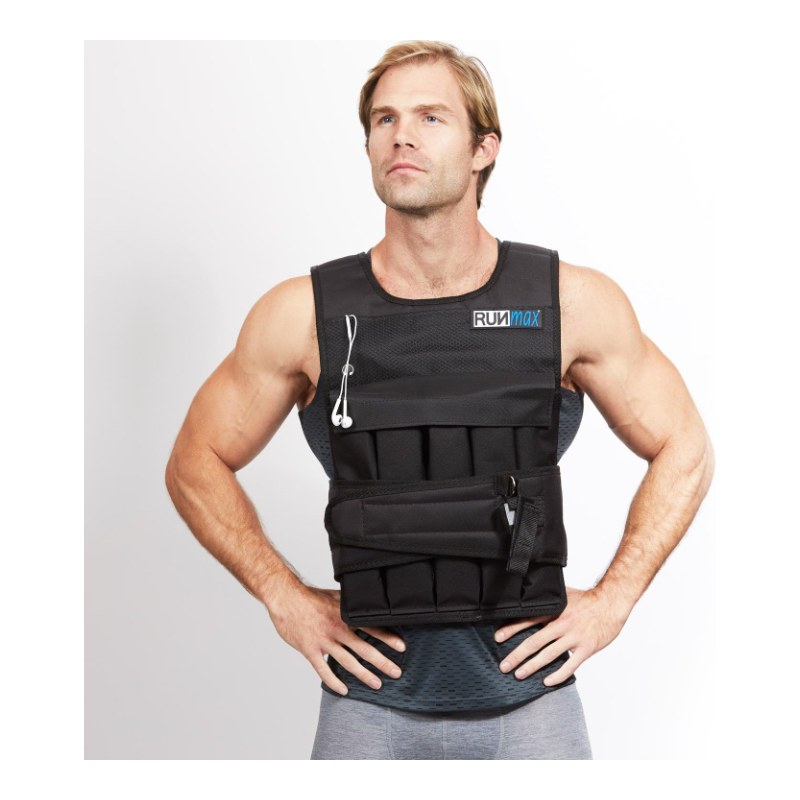
RUNmax Adjustable Weighted Vest
You need this if: you are a strong lifter or do military-style workouts and need serious weight.
- WeightVersions from 20 to 150 lb
- Fabric1000D tear-resistant nylon
- ChestFits 28 to 48 in
- Ratings4.6★, 2,200+
Why we recommend it: Built for heavy work, with versions up to 150 lb and optional shoulder pads. Buyers praise its quality and durability.
Keep in mind: Most people never need more than 20 to 40 lb. Choose the version that fits your goal.

Poudee Weighted Vest
You need this if: you want a low-cost fixed-weight vest for home workouts.
- Weights6 to 30 lb options
- FitAdjustable straps
- UseWalking, running, bodyweight
- Ratings4.6★, 2,700+
Why we recommend it: A good-value alternative with a strong rating. Buyers like the weight options and value.
Keep in mind: Fit and adjustability are mixed topics, so it may suit some body shapes better than others.
Weighted vests compared
| Vest | Weight | Type | Best for | Rating |
|---|---|---|---|---|
| ZELUS | 6 to 30 lb | Fixed | Most people | 4.5★ (18,000+) |
| Zeerun | 6 to 30 lb | Fixed | Walking | 4.5★ (4,700+) |
| ERIC FLAG | 0 to 40 lb | Adjustable | Progressive training | 4.7★ (1,100+) |
| RUNFast Pro | Up to 40 lb | Adjustable | Rucking, CrossFit | 4.6★ (1,200+) |
| RUNmax | 20 to 150 lb | Adjustable | Heavy training | 4.6★ (2,200+) |
| Poudee | 6 to 30 lb | Fixed | Value | 4.6★ (2,700+) |
Weighted vest for walking: is it worth it?
For many people, yes. Walking with extra weight makes your heart, legs and core work harder at the same speed, so you get more from the same walk. Weight-bearing exercise is also widely recommended for bone health, which is one reason weighted vest walking is so popular with women over 40. Use our treadmill calculator to see how speed and incline change the effort, and remember that a vest adds load to every step, so build up slowly.
Best weighted vest for women
Many women prefer a slim, fixed-weight vest that sits close to the body and does not press on the chest. The ZELUS and Zeerun are good choices. Start with 6 to 12 lb for walking. If you want to strength train with a vest later, an adjustable vest like the ERIC FLAG lets you increase the weight in small steps.
Best weighted vest for men
Men who do calisthenics, rucking or CrossFit often prefer adjustable vests between 20 and 40 lb. The ERIC FLAG spreads weight well for pull-ups, push-ups and dips, while the RUNFast is a simple, budget-friendly option. Very strong lifters can choose a heavier RUNmax version.
Weighted vest workouts to try
- Weighted walk: 20 to 45 minutes at a brisk pace.
- Bodyweight circuit: 10 squats, 10 push-ups, 10 lunges each leg, 20-second plank. Repeat 3 to 4 times.
- Stair climbs: 5 to 10 minutes on stairs or a step.
- Pull-up and dip practice: add a light vest once you can do 8 to 10 clean reps without it. See our doorway pull-up bars.
- Rucking: a long walk with a heavier vest, on flat paths first.
How a weighted vest should fit
- It should sit high and snug on your chest and back, not hang low on your stomach.
- It should not bounce when you walk briskly.
- Straps should feel firm but let you breathe deeply.
- Weight should feel even on both shoulders.
Safety tips
- Start light and short, then add time before you add weight.
- Keep good posture: chest up, shoulders back.
- Avoid running with heavy vests; keep running vests light.
- Talk to your doctor first if you have back, joint, heart or bone problems, or are pregnant.
- Stop if you feel pain in your back, hips, knees or feet.
Weighted vest vs ankle weights vs backpack
| Option | Pros | Cons |
|---|---|---|
| Weighted vest | Weight sits close to your body and spreads evenly | Costs more than a backpack |
| Ankle weights | Cheap and small | Can strain knees and hips when walking |
| Backpack with weight | Uses what you already own | Pulls you backward and bounces |
For walking and workouts, a vest is the safest and most comfortable way to add load. Most trainers do not recommend walking with ankle weights for long periods.
What is rucking?
Rucking means walking with a weighted pack or vest, often on longer routes and trails. It comes from military training and has become a popular way to build endurance and strength at the same time. Beginners usually start with 10% of their body weight for 30 to 45 minutes on flat ground, then add distance before adding weight. Adjustable vests like the RUNFast or ERIC FLAG are popular for rucking.
Weighted vests for older adults
Many older adults use light weighted vests to make daily walks more challenging. Keep the weight light, start with 5% of your body weight or less, and focus on good posture. Ask your doctor first, especially if you have osteoporosis, balance problems or joint pain. A vest that is too heavy can do more harm than good.
Common mistakes
- Going too heavy too soon. Add 2 to 5 lb at a time, every few weeks.
- Wearing it all day. Use it for workouts and walks, not for hours at a desk.
- Ignoring fit. A loose vest bounces and rubs; tighten the straps.
- Running with a heavy vest. Keep running vests light.
- Skipping rest days. Your joints and back need time to adapt.
How to clean and store a weighted vest
Remove the weights from adjustable vests and wipe the inside with a damp cloth after sweaty sessions. Hang the vest to air-dry away from direct heat. For fixed vests, spot-clean the fabric with mild soap and water. Store it flat or hanging, not folded tightly, so the filling stays evenly spread.
Pair your vest with the right gear
Good walking or running shoes matter more when you carry extra weight. If you walk indoors, a treadmill with incline makes vest walks even more effective; see our best treadmills for home. For strength workouts, pair the vest with adjustable dumbbells or a kettlebell.
Our verdict
For most people, the ZELUS weighted vest is the easiest place to start: it is comfortable, comes in many weights and has the most buyer feedback by far. Walkers who want extra padding should choose the Zeerun. If you want one vest that grows with your strength, the adjustable ERIC FLAG is worth the extra money. Start light, build slowly and enjoy a harder workout in the same amount of time.
See also: Track your walks with our steps to miles calculator.
Got questions?
Frequently asked questions
What weight vest should a beginner use?
About 5% of your body weight, for example 6 to 10 lb for most beginners. Build up to about 10% over a few weeks.
Is walking with a weighted vest good for you?
For most healthy adults, yes. It makes walking harder without extra impact. Start light and talk to your doctor if you have health concerns.
What is the best weighted vest for women?
The ZELUS for most women, or the Zeerun for extra shoulder padding on long walks.
Should I buy a fixed or adjustable weighted vest?
Fixed for walking and comfort. Adjustable if you want to progress or use it for strength training.
How long should I wear a weighted vest?
Start with 20 to 30 minutes, a few times a week, and build up as you get stronger.
Can I run with a weighted vest?
Only with a light vest, around 5% of your body weight or less, and on soft, flat surfaces.
How we chose
We compared the best-selling and best-reviewed weighted vests on Amazon in October 2026. We looked at weight options, fit, comfort, adjustability and durability, and read Amazon’s review topics and verified buyer reviews. We picked one vest for each goal. We have not tested these vests in person, no brand paid for placement, and prices change often. Read our full method.

We research sports gear for players, coaches and sports parents. We compare specs, read verified buyer reviews and name one clear pick for each kind of player. How we pick · Affiliate disclosure